Launch offer — valid today only

📄 Digital book in PDF · read it on your phone or print it

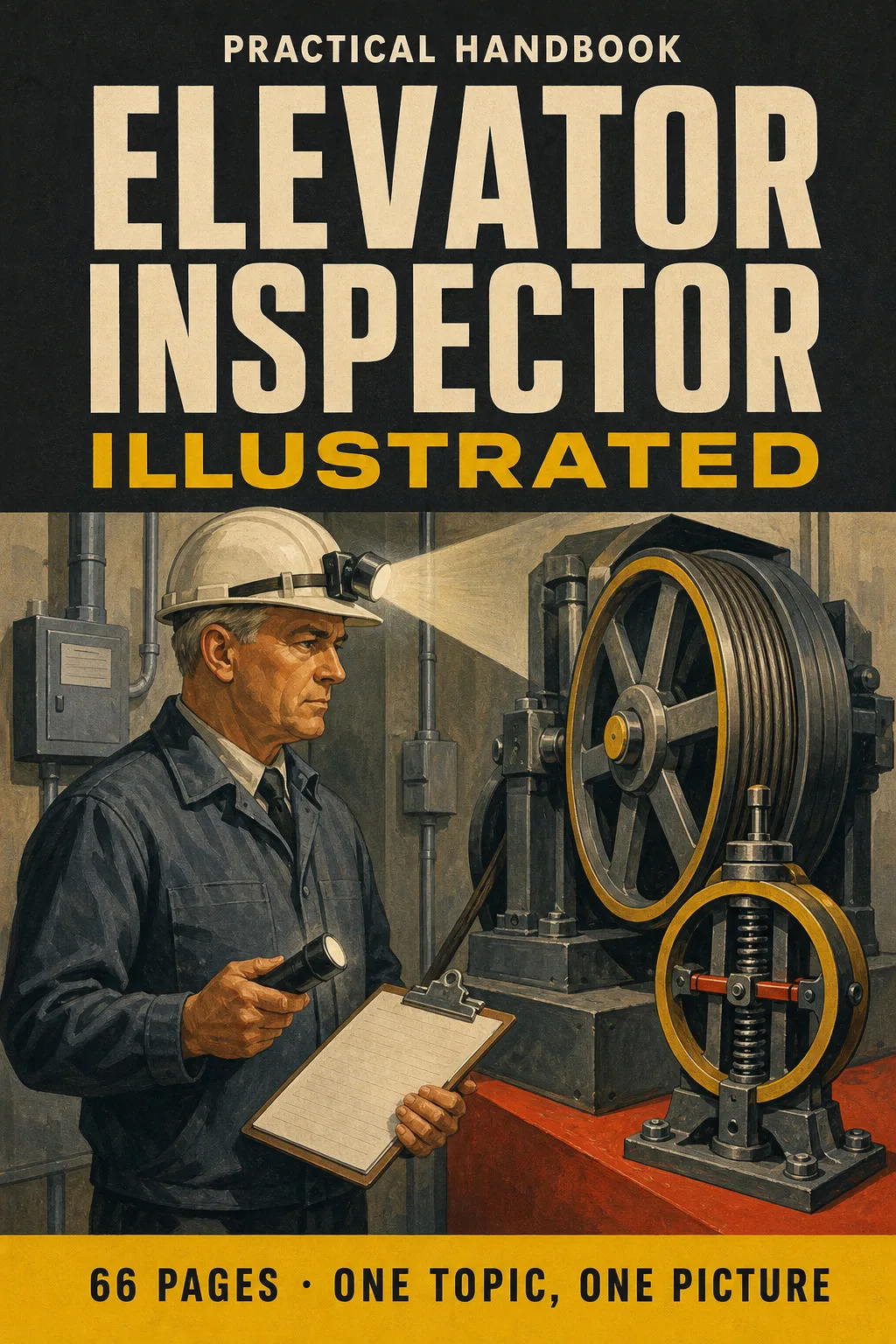
Elevator Inspection and the QEI Exam, Illustrated Machine Room to Pit, in Order

Traction machines and brakes, the governor, car top entry, hoistway door interlocks, the pit and buffers, Phase I and II fire service, escalators and category tests. Each topic has its own page: the drawing first, then what you need to remember. 66 illustrated pages.

START STUDYING THIS WAY

🔒 Secure checkout · PDF by email · 30-day guarantee

Every topic, its own pageEach part of the elevator drawn, with the explanation right beside it
66 illustrated pages9 parts, from mechanic to QEI inspector to your first inspection checklist
Up-to-date sourcesASME A17.1/CSA B44, ASME A17.2 and ASME QEI-1
PDF by emailFormat

Look Inside the Book

Every page has one big drawing and a box with the numbers, steps and checks you need to know:

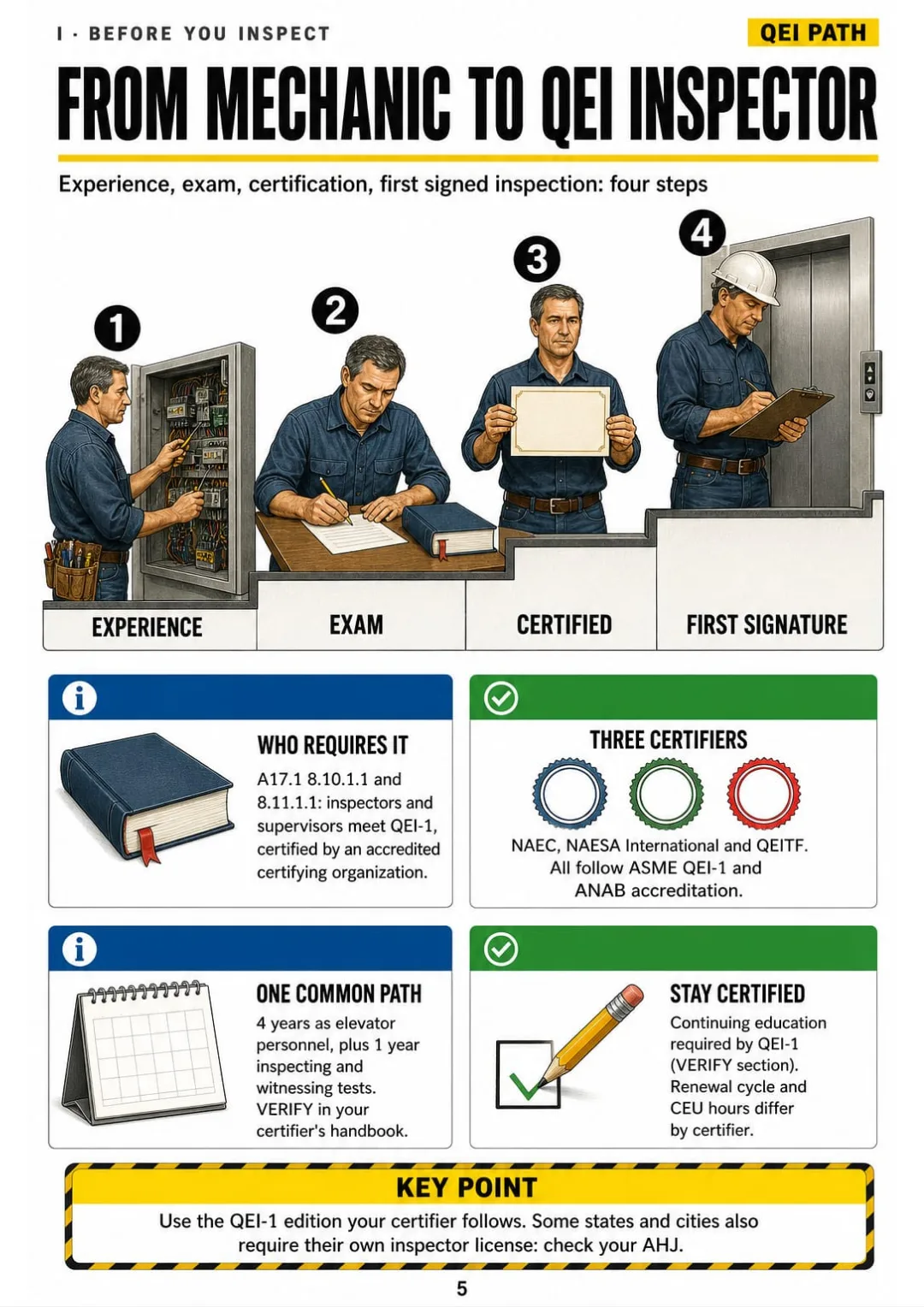
QEI-1-2024, three certifiers, one eligibility path: the route from mechanic to signed inspection
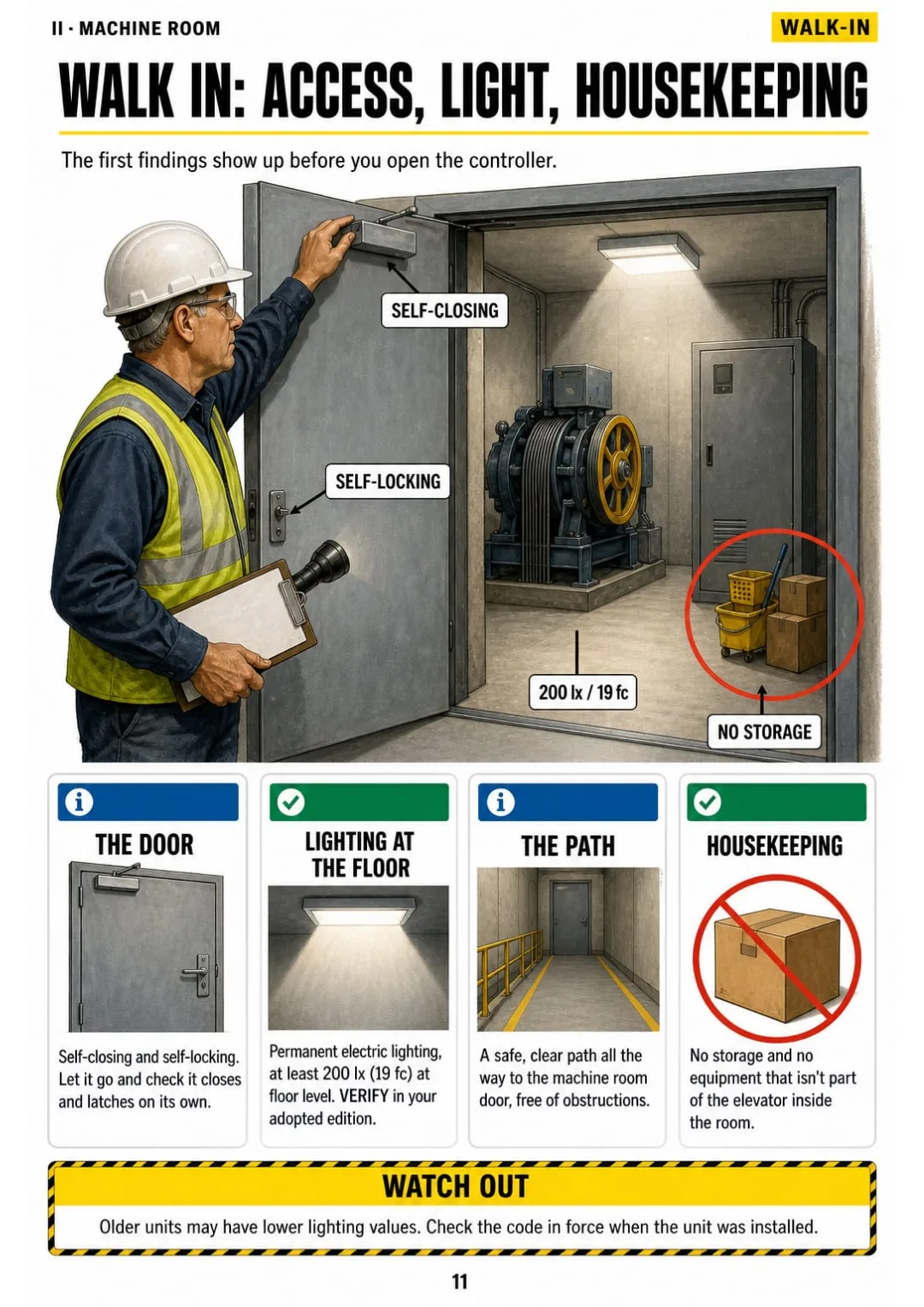
Machine room: self-closing, self-locking door and at least 200 lx (19 fc) at floor level (VERIFY).
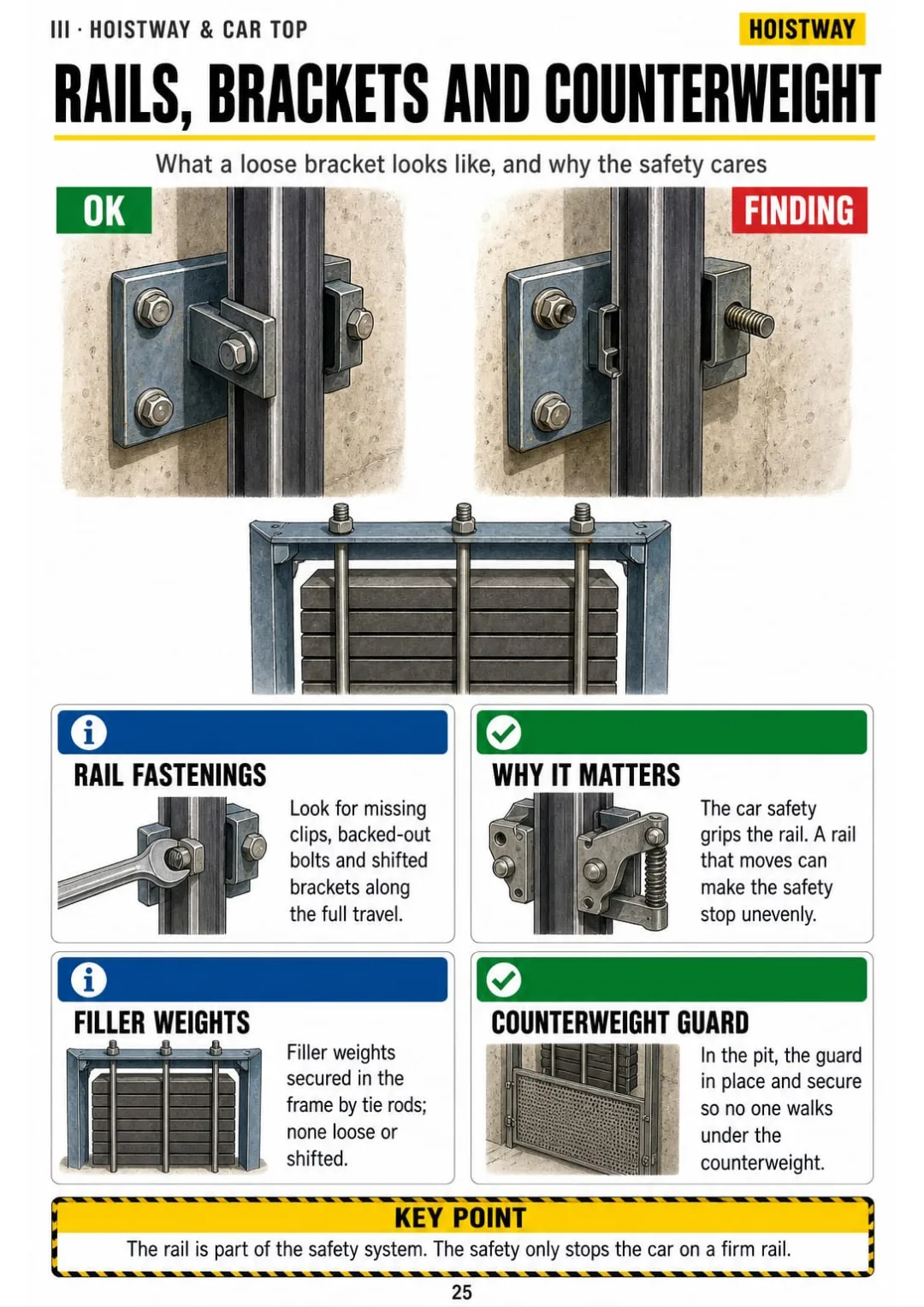
Tight vs. loose rail bracket, plus filler weights and counterweight guard
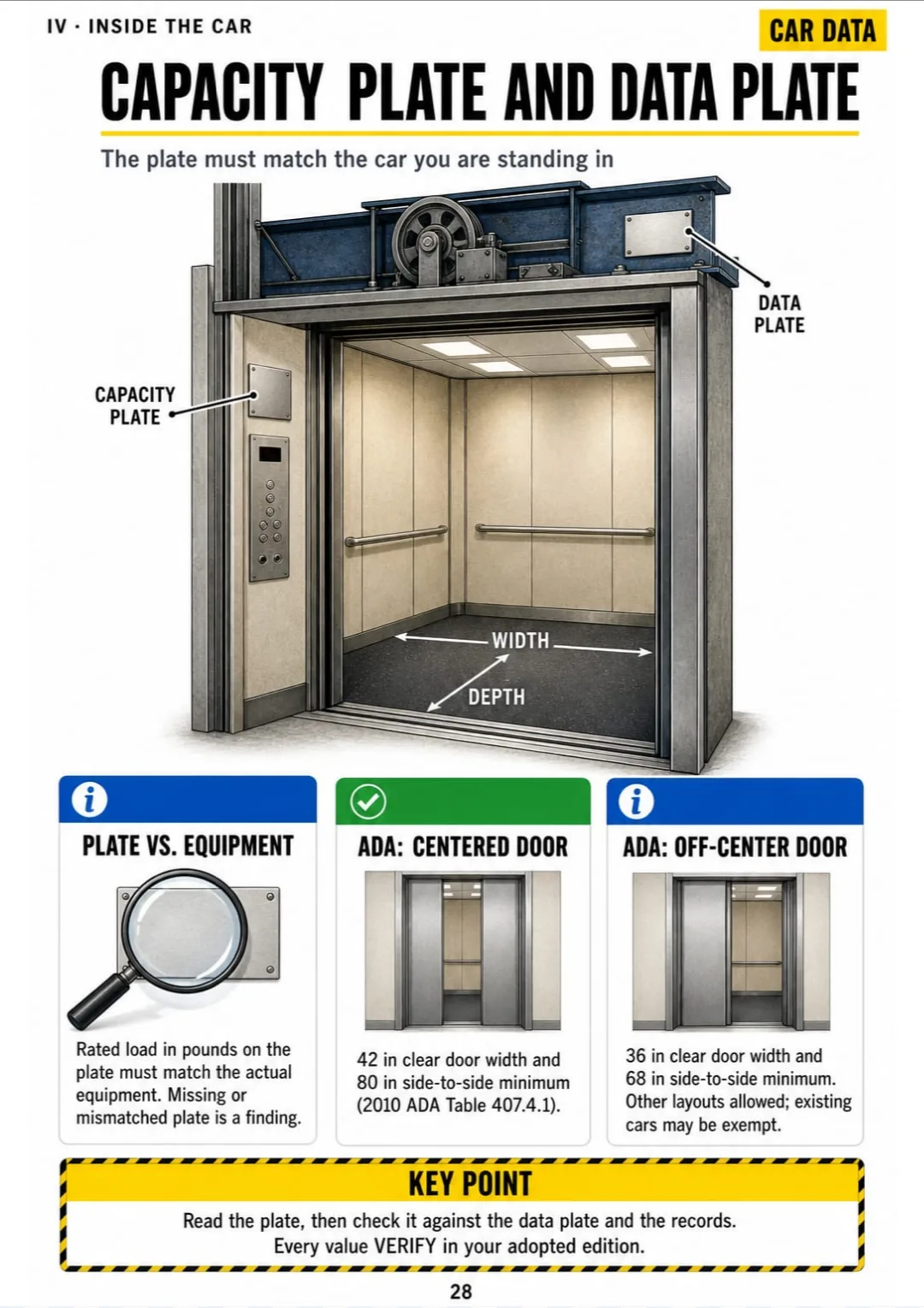
Capacity plate in the car, data plate on the crosshead, platform area checked against rated load
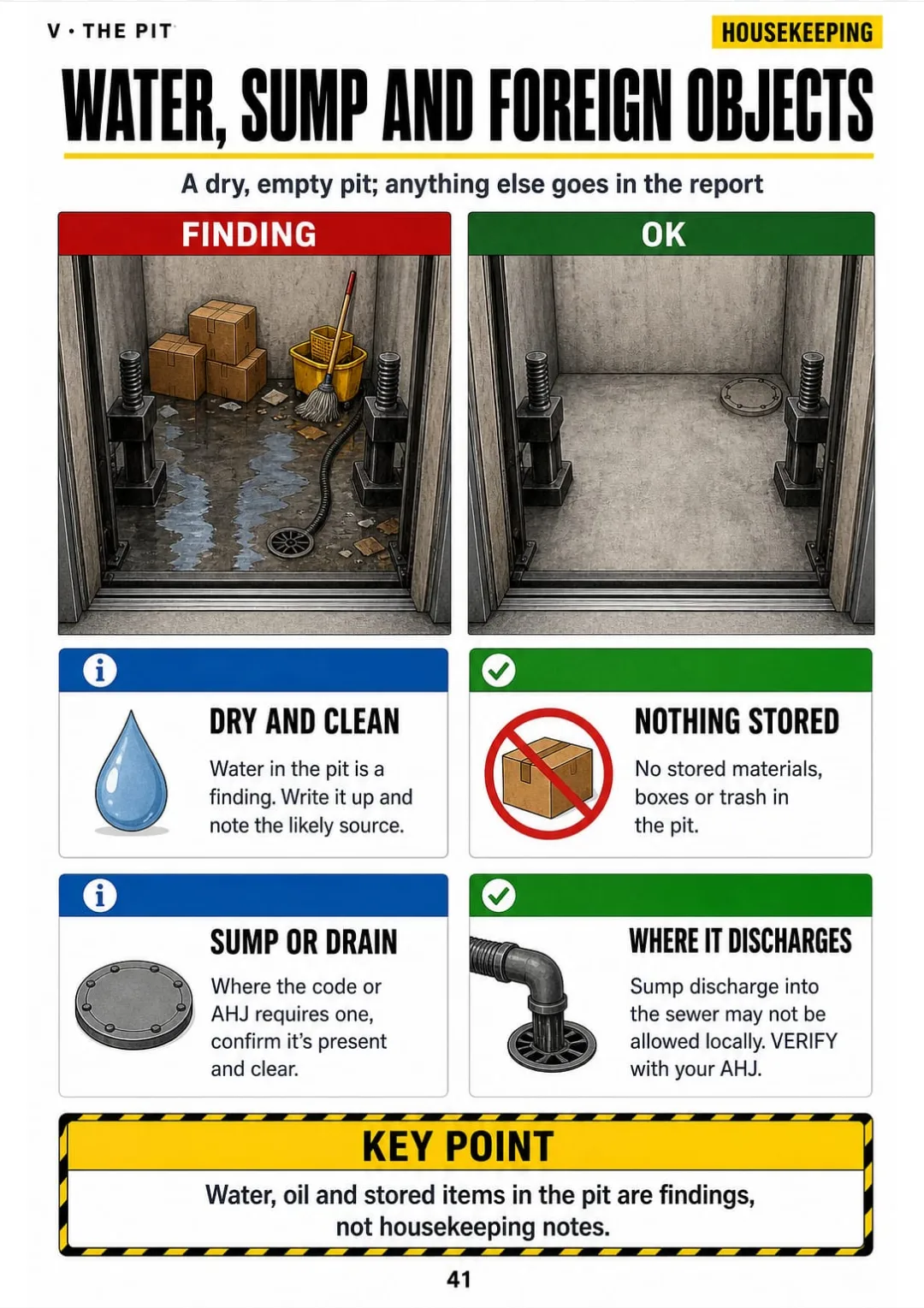
Water in the pit is a finding; sump discharge rules are local (VERIFY)
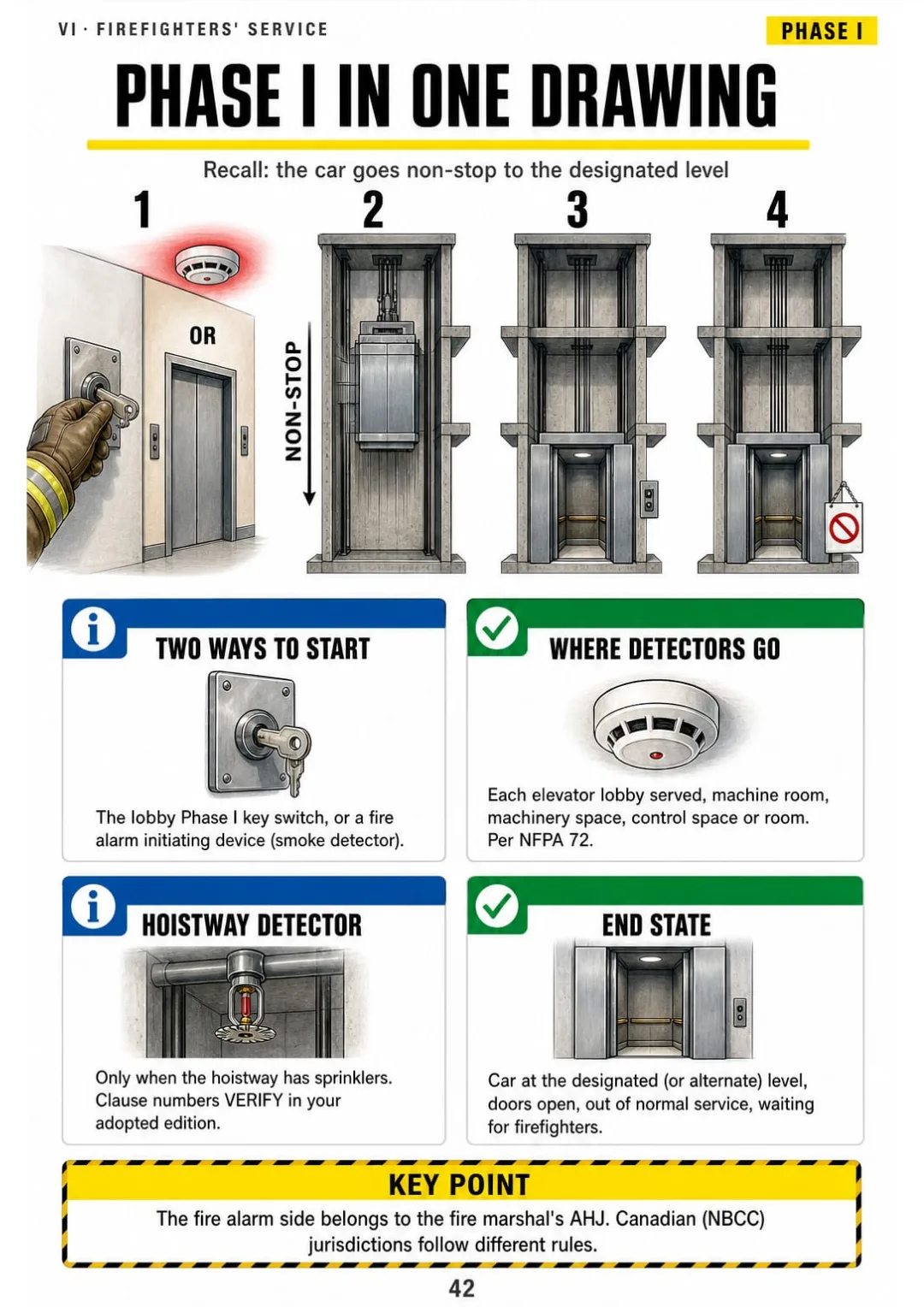
Phase I: key switch or smoke detector sends the car non-stop to the designated level
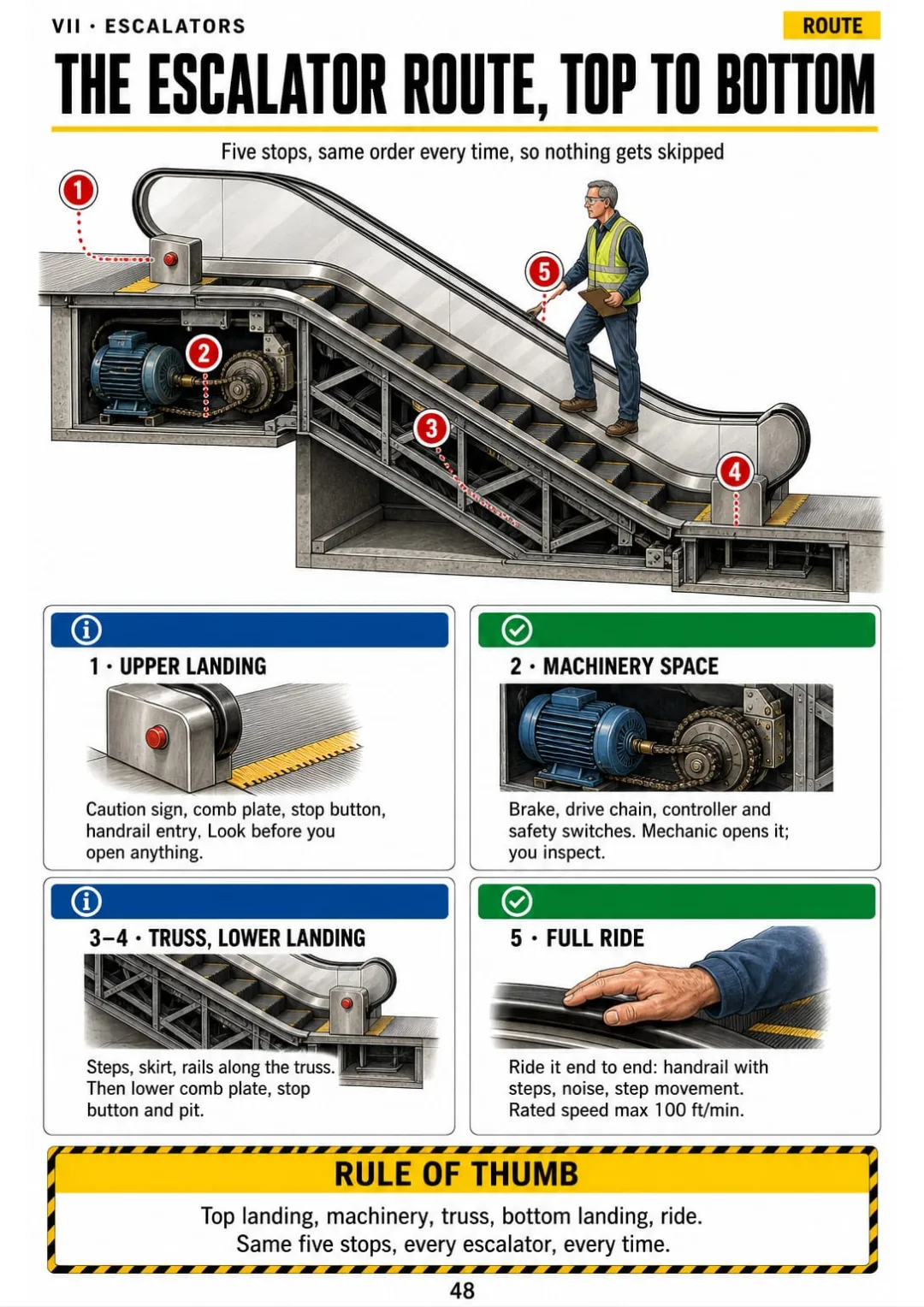
Five fixed stops: upper landing, machinery space, truss, lower landing, full ride.
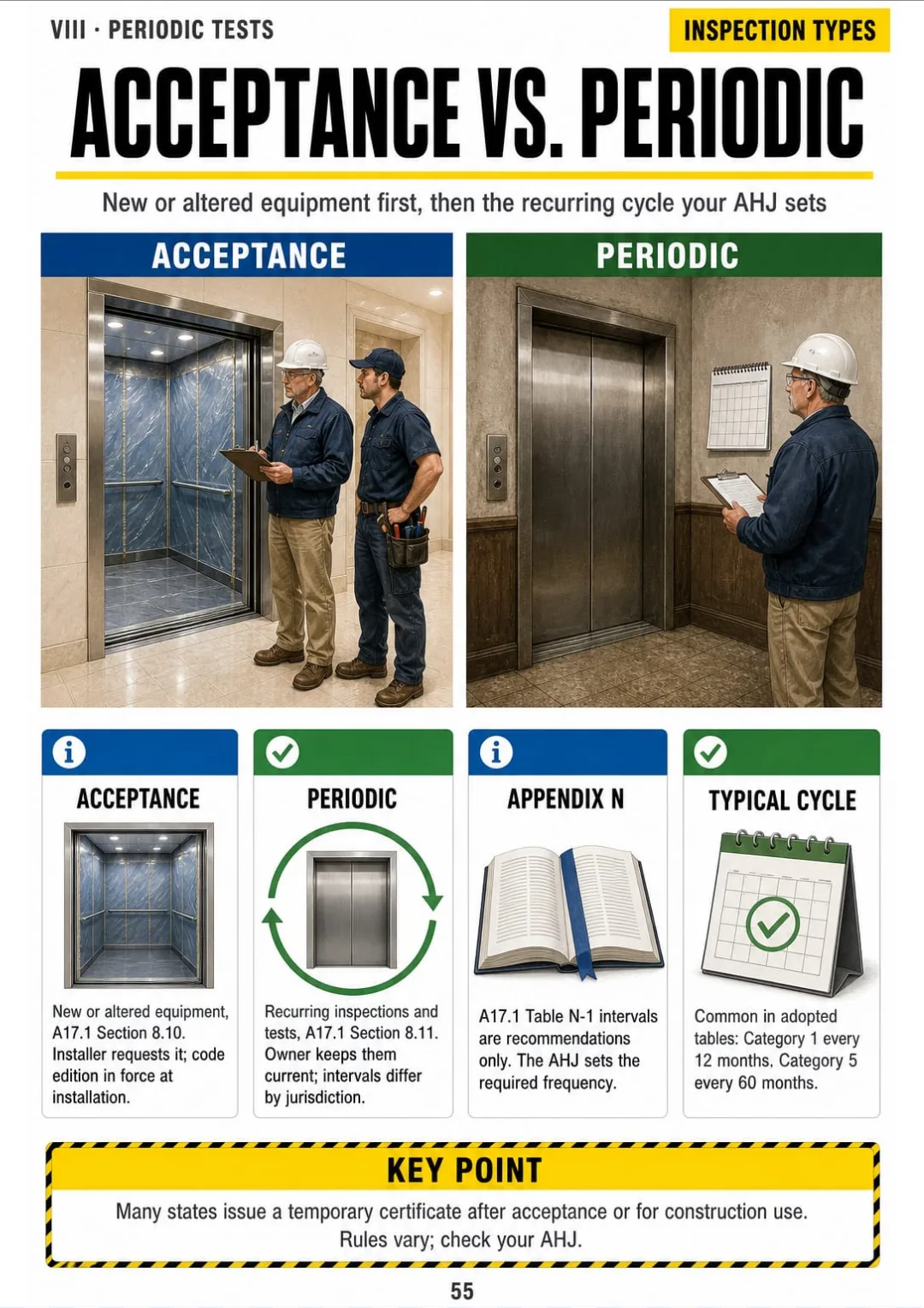
Category 1 typically every 12 months, Category 5 every 60 months, per your AHJ

Swipe to see more →

These are real pages from the book. The table of contents is the full one: 9 parts and 62 topics.

The Problem Isn't You. It's How It Was Explained to You.

You're at the top landing with the hoistway door cracked open, and the mechanic is waiting for you to call the car top entry, step by step.

You've ridden car tops for years. But the code and the guide spread that sequence across paragraphs and cross-references, so you read it at night and the order is gone by morning.

Tight vs. loose rail bracket, plus filler weights and counterweight guard

In this book, getting on the car top is one page: six steps drawn in order, from the access switch to stepping on, with what to check at each one.

The rest works the same way: hoistway door interlocks, the governor, spring vs. oil buffers, Phase I recall, Category 5 tests. Each one gets its own page.

You understand the sequence, and you call it out without going back to the code book.

COMPARE FOR YOURSELF

The Same Topic, Two Ways to Study It

THIS
  • The code book: line after line
  • Machine room access, lighting and housekeeping explained only in words
  • You show up to the inspection with doubts
Means of access to machine rooms and control spaces shall be provided by doors of the self-closing and self-locking type, openable from the inside without a key, and shall be kept closed and locked when the space is unattended. Permanent electric lighting shall be provided in all such spaces, the illumination being not less than 200 lx (19 fc) at floor level, with the lighting switch located within easy reach of the point of entry. Said spaces shall not be used for the storage of materials unrelated to the equipment and shall be maintained clean and free of obstructions at all times.
FOR THIS
  • Walking into the machine room in one drawing
  • The door and lighting checks in a box
  • You see it and you get it
Machine room: self-closing, self-locking door and at least 200 lx (19 fc) at floor level (VERIFY).
CONTENTS

Take a Look at the 9 Parts and 62 Topics

From “Before You Inspect” to exam review: the machine room, hoistway and car top, inside the car, the pit, firefighters' emergency operation, escalators and periodic inspections. 66 pages, all illustrated.

IBefore You Inspect · pp. 5-10
  1. From Mechanic to QEI Inspector
  2. How A17.1 Is Organized
  3. A17.1, A17.2 and A17.3: Who Does What
  4. The Inspection Route
  5. Your Own Safety First
  6. Inspector vs. Mechanic: Who Runs the Test
IIMachine Room and Control Space · pp. 11-19
  1. Access, Lighting and Housekeeping
  2. Mainline Disconnect
  3. Controller and Wiring Diagrams
  4. Traction Machine and Brake
  5. Sheaves and Hoist Ropes
  6. The Governor
  7. Hydraulic Power Unit
  8. The Pressure Relief Valve
  9. MRL: Where the Machine Room Went
IIIHoistway and Car Top · pp. 20-27
  1. Getting on the Car Top Safely
  2. Top-of-Car Operating Device
  3. Top Clearance and Refuge Space
  4. Hoistway Door Interlocks
  5. Testing an Interlock
  6. Rails, Brackets and Counterweight
  7. Normal and Final Terminal Stopping
  8. Traveling Cable and Hoistway Wiring
IVInside the Car · pp. 28-35
  1. Capacity Plate and Data Tag
  2. Door Closing Force: 30 lbf
  3. Door Kinetic Energy
  4. Door Reopening Device
  5. Emergency Communication
  6. Emergency Lighting and Alarm
  7. Leveling and Stopping Accuracy
  8. Car Enclosure, Stop Switch and Top Exit
VThe Pit · pp. 36-41
  1. Pit Access, Ladder and Lighting
  2. Pit Stop Switch and Refuge
  3. Buffers: Spring vs. Oil
  4. Car Safety and Safety Plank
  5. Hydraulic Cylinder and Plunger
  6. Water, Sump and Foreign Objects
VIFirefighters' Emergency Operation · pp. 42-47
  1. Phase I in One Drawing
  2. Designated vs. Alternate Level
  3. The Firefighter Hat Signal
  4. Phase II: In-Car Operation
  5. Shunt Trip and Sprinklers
  6. Monthly Test and Log
VIIEscalators and Moving Walks · pp. 48-54
  1. The Escalator Route
  2. Comb Plates and Steps
  3. Step-to-Skirt Clearance
  4. Handrails
  5. Stop Switches and Safety Devices
  6. Brake and Stopping Distance
  7. Signage and Landings
VIIIPeriodic Inspections and Tests · pp. 55-61
  1. Acceptance vs. Periodic
  2. Category 1: Traction
  3. Category 5: Traction
  4. Hydraulic Category Tests
  5. The Maintenance Control Program (MCP)
  6. Tags, Signatures and Records
  7. Writing a Clear Violation
IXReview and Exam Prep · pp. 62-66
  1. The Whole Route on One Page
  2. Numbers to Know
  3. Tabbing Your Code Book
  4. Frequent Mix-Ups
  5. Your First Inspection: Final Checklist

One Page, One Topic, All Clear

Think of it this way:

You're at the bottom landing for a periodic and you need to get into the pit: ladder, lights, stop switch, in that order.

You open the pit access page and see the pit drawn from the sill down: the fixed ladder, the light switch and the stop switch, each one where your hand goes, and the depth that calls for a fixed ladder in a box.

Water in the pit is a finding; sump discharge rules are local (VERIFY)

The same goes for the governor, interlock testing, Phase I recall, step-to-skirt clearance and Category 5 tests: each one on its own page.

Elevator Inspector Illustrated is 9 parts and 62 topics, all drawn, and it ends with the whole route on one page, the numbers to know and a final checklist.

What you see drawn, you don't have to memorize.

What's Inside Elevator Inspector Illustrated:

Ipp. 5-10

Before You Inspect

How you go from mechanic to QEI inspector, how A17.1 is organized, what A17.1, A17.2 and A17.3 each cover, the inspection route, your own safety and who runs the test.

IIpp. 11-19

Machine Room and Control Space

Access, lighting and housekeeping, the mainline disconnect, the controller, the traction machine and brake, sheaves and ropes, the governor, the hydraulic power unit, the relief valve and MRL units.

IIIpp. 20-27

Hoistway and Car Top

Getting on the car top safely, the top-of-car station, top clearance and refuge space, door interlocks and how to test them, rails and counterweight, terminal stopping and hoistway wiring.

IVpp. 28-35

Inside the Car

The capacity and data plates, the 30 lbf door closing force, door kinetic energy, the reopening device, emergency communication, lighting and alarm, leveling, and the car enclosure and top exit.

Vpp. 36-41

The Pit

Pit access, ladder and lighting, the pit stop switch and refuge, spring vs. oil buffers, the car safety and safety plank, the hydraulic cylinder and plunger, and water and debris in the pit.

VIpp. 42-47

Firefighters' Emergency Operation

Phase I in one drawing, designated vs. alternate level, the firefighter hat signal, Phase II in-car operation, shunt trip and sprinklers, and the monthly test and log.

VIIpp. 48-54

Escalators and Moving Walks

The escalator route, comb plates and steps, step-to-skirt clearance, handrails, stop switches and safety devices, brake and stopping distance, and signage and landings.

VIIIpp. 55-61

Periodic Inspections and Tests

Acceptance vs. periodic, traction Category 1 and Category 5, hydraulic category tests, the Maintenance Control Program, tags and records, and how to write a clear violation.

IXpp. 62-66

Review and Exam Prep

The whole route on one page, the numbers to know, tabbing your code book, frequent mix-ups and a final checklist for your first inspection.

At the end of the book: The whole inspection route on one page, the numbers to know, code-tabbing tips and a first-inspection checklist.
Plus: 2 Free Books

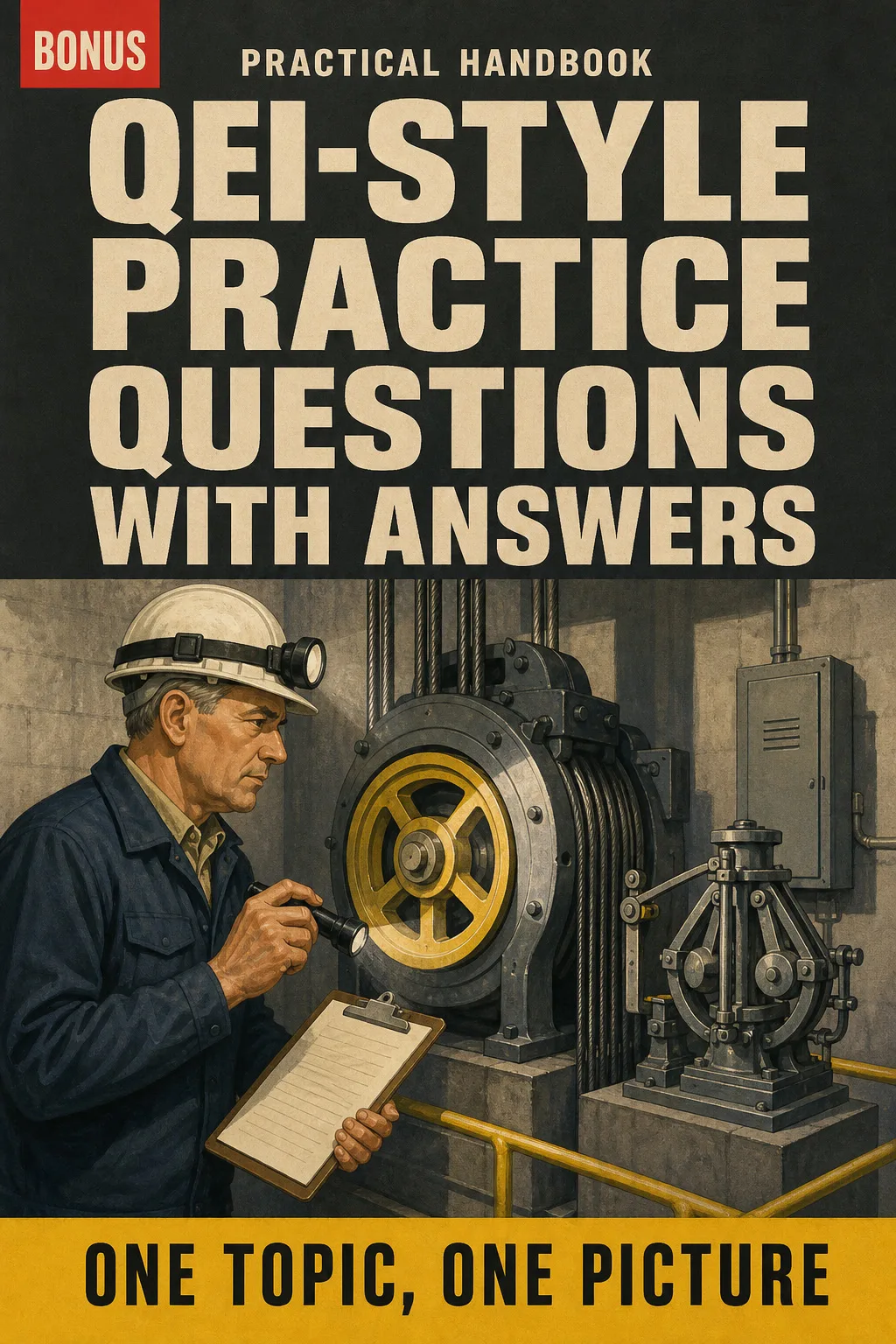
QEI-Style Practice Questions with Answers

BONUS 1: «QEI-Style Practice Questions with Answers»

Value on its own: US$ 17.90

Test yourself topic by topic with exam-style questions, and every answer explains why, so you know exactly what to go back and review.

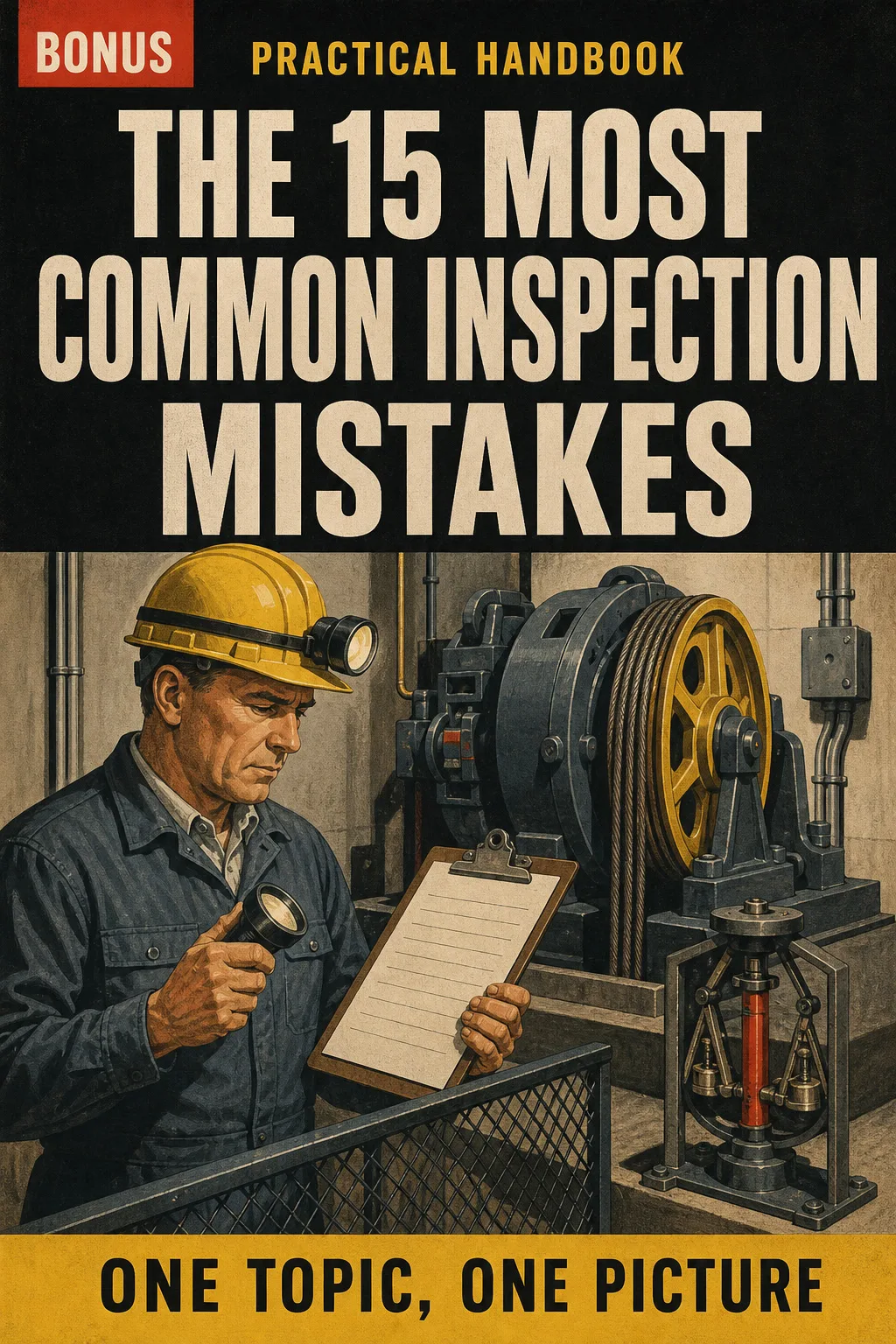
The 15 Most Common Inspection Mistakes

BONUS 2: «The 15 Most Common Inspection Mistakes»

Value on its own: US$ 14.90

Each frequent mistake shown side by side, wrong vs. right, drawn so you can spot it on the job and in the exam question.

Elevator Inspector Illustrated with 2 Free Books

  • Elevator Inspector Illustrated: 66 illustrated pagesUS$ 63
  • BONUS 1: QEI-Style Practice Questions with AnswersUS$ 17.90
  • BONUS 2: The 15 Most Common Inspection MistakesUS$ 14.90
  • High-resolution PDF to printIncluded
Total value US$ 95.80
YOUR PRICE:
US$ 27
You save US$ 68.80
YES, I WANT ELEVATOR INSPECTOR ILLUSTRATED FOR US$ 27

📄 This is a digital PDF book sent to your email: nothing is printed or shipped.

Secure purchaseEncrypted payment30-day guarantee

PDF by email: We email you Elevator Inspector Illustrated as a PDF, together with the two free books. It's a single payment: no installments, no extra charges.

Who This Book Is For

You're studying for the QEI

You're studying for the QEI

You get the code organized the way you already work: machine room, hoistway, car, pit, escalator. Each topic is one drawing you can picture.

Your exam is coming up

Your exam is coming up

You review the numbers to know, the frequent mix-ups and the whole route on one page, then test yourself with the practice questions.

You're already inspecting

You're already inspecting

You print the pages you need and keep them in your truck, so before a category test you can go over the sequence in a couple of minutes.

Everything You Get Today

US$ 95.80US$ 27
YES, I WANT ELEVATOR INSPECTOR ILLUSTRATED FOR US$ 27

📄 This is a digital PDF book sent to your email: nothing is printed or shipped.

30DAYS
GUARANTEE

30-Day Guarantee

Try Elevator Inspector Illustrated for 30 days, bonus books included.

We refund everything if the file won't open, if the book isn't what you see here, if you were charged twice or if the email doesn't arrive. Just email us.

You pay once. No subscriptions.

Frequently Asked Questions

Is it for me if I've been an elevator mechanic for years?

Yes. It doesn't explain what a hoist rope is. It puts what you already know into inspection order and shows what the code checks at each stop, and why.

Where does the content come from?

From ASME A17.1/CSA B44, the ASME A17.2 inspection guide and ASME QEI-1. Every value and section reference is checked against the edition named on the first page of the book. Many states and cities adopt an older edition, and section numbers can change between editions, so always confirm the edition your AHJ enforces.

Is it official material?

No. It's an independent illustrated study companion. It doesn't reproduce the code text, it doesn't give you a certificate or continuing education hours, and you still need your own copy of the code.

Does it replace the code book or the required training?

No. It helps you study and review. It doesn't replace the official code, your certifier's training requirements or field experience.

Are the practice questions the ones on the exam?

No. They are written for this book, in the style of the QEI, so you can check what you know topic by topic. They are not official exam questions.

When and how do I get it?

The book and the 2 bonus books come as PDFs by email.

Do I have to pay every month?

No. It's a one-time payment. No subscription.

Can I have it on paper?

Yes. It's a PDF made to print, so you can print the whole book or just the pages you want to take to the job.

How does the refund work?

You have 30 days. We refund everything if the file won't open, if the book isn't what you see on this page, if you were charged twice or if the email doesn't arrive: just email us.

Before You Close This Page

No more rereading the code and keeping nothing.

Car top entry, interlocks, buffers: you see them drawn, and that's it.

You walk into the exam knowing where everything is.

Drawings make studying faster.

The book is right below.

One-time payment: US$ 27 · Guarantee: 30 days · PDF by email

YES, I WANT ELEVATOR INSPECTOR ILLUSTRATED FOR US$ 27

📄 This is a digital PDF book sent to your email: nothing is printed or shipped.